

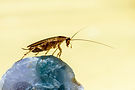

The German cockroach (Blattella germanica) is the most prevalent cockroach species in the United States and poses a significant problem in Montana homes, restaurants, hotels, and multi-unit housing. Despite its name, it is believed to have originated in Southeast Asia — and it has thrived alongside humans for thousands of years. It is a formidable pest: fast-reproducing, resistant to many pesticides, and extremely difficult to fully eliminate without professional intervention.
A single female German roach can produce up to 400 offspring in her lifetime. Under ideal conditions, a population can double in size in less than a month. They are primarily nocturnal and prefer warm, humid environments close to food and water — kitchens and bathrooms are their primary habitat. Because they hide in cracks, voids, and behind appliances during daylight hours, infestations are often far more established by the time they're detected.
German roaches do not fly. They spread primarily through infested food packaging, used appliances, cardboard boxes, and in multi-unit buildings, through shared wall voids.
Size
½ – ⅝ inch
Color
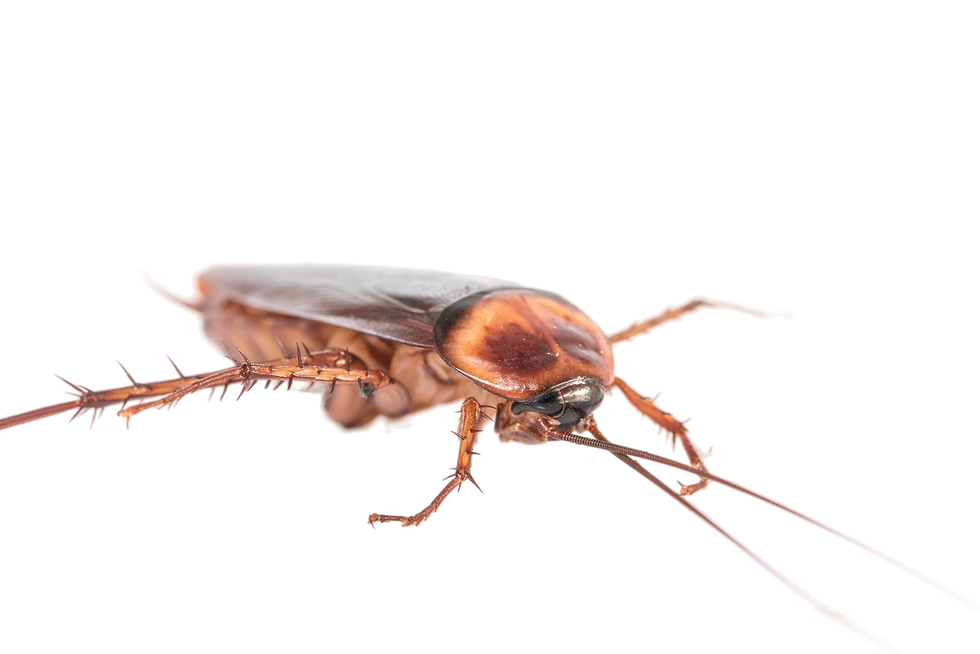
Light brown with two dark stripes behind the head
Active Season
Year-round (indoors)
Risk Level
High (disease transmission; allergen production)
Habitat
Kitchens, bathrooms, behind appliances
Reproduction
1 female = up to 400 offspring
SIGNS OF INFESTATION
How to Tell If You Have German Cockroaches
-
Seeing roaches during the day — German roaches are nocturnal; daytime sightings indicate a severely overcrowded infestation.
-
Fecal droppings — Small, dark specks resembling ground pepper found in cabinet corners, under appliances, or along wall junctions.
-
Egg cases (oothecae) — Brown, rectangular capsules roughly ¼ inch long found behind appliances or in cabinet hinges.
-
Musty odor — A distinctive, oily, musty smell in heavily infested areas.
-
Smear marks — Dark, irregular grease smears along walls and surfaces in high-traffic roach pathways.
-
Shed skins — Roaches molt as they grow; finding shed exoskeletons is a reliable sign of an active infestation.
HEALTH RISKS
German cockroaches are serious public health pests. They mechanically transmit Salmonella, E. coli, and other pathogens by walking across food preparation surfaces after traveling through sewage and waste. Their shed skins, saliva, and fecal matter are potent allergens — a leading trigger for asthma attacks, particularly in children.
Studies have found that cockroach allergen is one of the top asthma triggers in urban environments. In food service settings, a single cockroach sighting can result in health code violations and mandatory closure.
PROPERTY DAMAGE
German roaches do not cause structural damage, but an established infestation results in contaminated food supplies, damaged food packaging, and oily staining of surfaces. In severe infestations, the odor becomes pervasive and difficult to eliminate without thorough professional treatment. Commercial reputation damage is also a serious consequence for any food or hospitality business with a German roach problem.