


Pre-Construction Termite Soil Treatment in Montana: How It Works and When to Schedule It
What is pre-construction termite soil treatment?
Pre-construction termite soil treatment is a liquid termiticide applied to the soil under and around a new building's foundation before the slab is poured and before final grade. It creates a continuous treated zone that subterranean termites can't cross to reach the wood above. In Western Montana, it's the most common termite work we do. Most of our termite jobs are pretreatments for new homes and commercial buildings in Missoula, Kalispell, the Bitterroot and the Flathead.

Do we really have termites in Montana?
Yes. Montana isn't Florida, but we do have native subterranean termites, mainly western subterranean termites and arid-land subterranean termites. They live in the soil, travel through mud tubes, and feed on wood that touches or sits close to the ground. Cold winters slow them down but don't stop them, because colonies sit below the frost line and move up when the soil warms. See our guide to termites in Montana for identification photos and warning signs, and the Montana State University urban entomology fact sheets for more on local insects.

Active infestations in existing Montana homes are less common than in southern states. That's exactly why pretreatment makes sense: it's the cheapest and easiest moment to protect a structure, and lenders often require it anyway. If you already own a home, here's how to spot termite damage, and why log homes need extra protection.
Who needs a termite pretreatment?
Builders and general contractors putting up single-family homes, townhomes and multifamily buildings.
Commercial projects such as offices, retail, schools, shops and agricultural buildings on slab or crawlspace foundations. See our commercial pest control services.
Homes financed with FHA or VA loans. New construction under these programs generally needs documented termite protection on the HUD-NPMA-99-A form.
Owner-builders who want protection built in from day one.
What product do you use?
We use Termidor SC (active ingredient fipronil), one of the most widely used termiticides for pre-construction work. Every application follows the product label for concentration, volume and method. The label sets the minimums, and we don't go below them. The EPA's termite guidance explains why following label directions matters for both protection and safety.
When should a pre-construction termite treatment be scheduled?
Treatment happens in stages, up to and including installation of the final grade:
Horizontal treatment, before the slab is poured. After footings, under-slab plumbing and fill are in, and before the vapor barrier and concrete go down.
Vertical treatment along the foundation. Inside and outside foundation walls, around pillars and piers, and around every plumbing and utility penetration.
Exterior perimeter, after final grade. The label only allows the outside perimeter to be treated once the final exterior grade is complete.
Call us as soon as you set your pour date so we can schedule around your crews. The label strongly advises creating the full horizontal treated zone before the slab is poured. If concrete goes down first, we can still treat penetrations, joints, bath traps and shower drains, but complete under-slab coverage is no longer possible.
How is the soil treated?
Horizontal treated zones (under the slab)
We treat the entire soil surface that will be covered by concrete. That includes the living area, garages and carports, porches, basement floors and extended entrances. The finished dilution goes on at 1 to 1.5 gallons per 10 square feet as a low-pressure coarse spray (25 PSI or less at the nozzle), so it soaks evenly into the soil. Areas around pipes and utility lines that will penetrate the slab get a heavier rate of 1 to 1.5 gallons per square foot.
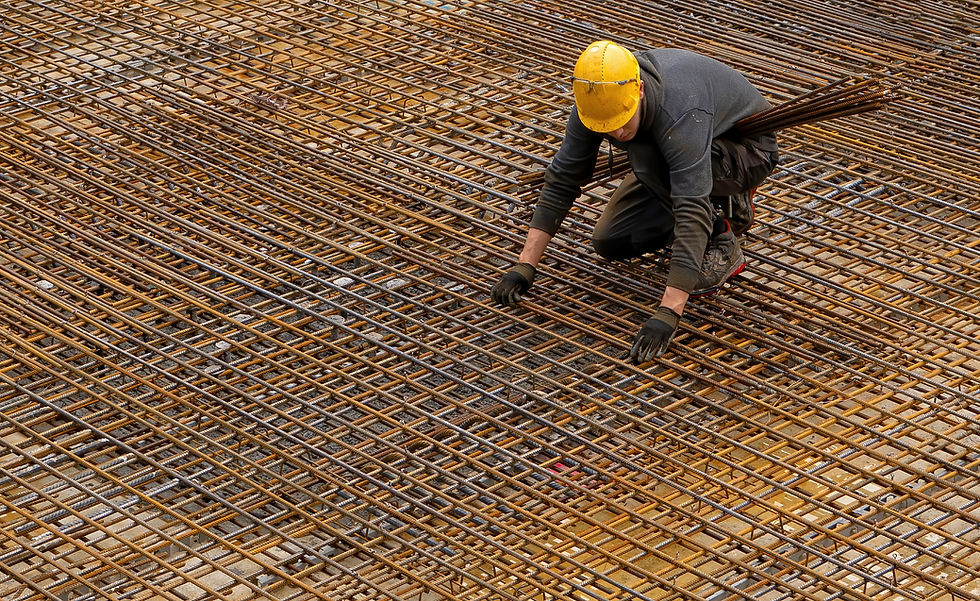
Vertical treated zones (along the foundation)
Along foundation walls, pillars and other foundation elements, we apply 4 gallons per 10 linear feet per foot of depth, from grade down to the top of the footing (or at least 4 feet deep on deeper footings). We trench, rod, or both:
Trenches are at least 6 inches deep and no wider than 6 inches, and never deeper than the bottom of the footing.
Rod holes are spaced no more than 12 inches apart so the treated zone stays continuous.
Treated soil is mixed back into the trench as it's replaced.
Crawl spaces
For crawlspace foundations, we treat both sides of the foundation plus every pier and pipe at the same 4 gallons per 10 linear feet per foot of depth.
What does the general contractor need to do?
Before every application, we notify the general contractor or site superintendent of where and when we'll treat. Workers and anyone else on site need to leave the treatment area and stay out until the solution has soaked into the soil. A clear area with no standing water lets us finish quickly and get your crews back to work.
What about Montana weather?
Because the treatment has to soak into the soil, frozen or waterlogged ground is a problem. Treated areas should also be covered by the vapor barrier and slab promptly so rain doesn't wash the treatment away. Late-fall and winter pours in Missoula and Kalispell take a little more planning, so tell us early if your schedule depends on a weather window.
What paperwork do I get?
After treatment, you get a written record of the application: product, concentration, square footage, linear footage and gallons applied. For FHA/VA-financed new homes, we complete the HUD-NPMA-99-A Subterranean Termite Protection Builder's Guarantee, the form lenders look for at closing. Keep a copy with your build documents.
How much does pre-construction termite treatment cost?
Price depends on the square footage of the slab or crawlspace, the linear feet of foundation and how many trips the job needs. Pretreating during construction almost always costs far less than treating a finished building, because nothing has to be drilled or trenched through concrete. Request a free quote based on your plans.
Frequently asked questions
Is termite pretreatment required in Montana?
It depends on the project. It's commonly required for FHA- and VA-financed new construction, and some lenders, builders or local jurisdictions require it on their own. Check with your lender and building department, and we can help you figure out what your job needs.
Can you treat after the slab is poured?
Yes, but with limits. We can treat penetrations, joints and drain openings, and protect the exterior with trenching and rodding. A complete horizontal zone under the slab is only possible before the pour.
Do you pretreat commercial buildings?
Yes. We pretreat commercial and multifamily projects as well as single-family homes.
How long do workers need to stay off the treated area?
Until the solution has been absorbed into the soil. We'll tell your superintendent before each application and let them know when the area is clear.
Schedule your termite pretreatment
Building in Missoula, Kalispell or anywhere in Western Montana? Call Montana Pest Solutions at (406) 830-8752 as soon as you have a pour date, and we'll get your pre-construction soil treatment on the schedule. Learn more about our exterminator services in Missoula and Kalispell pest control.

Comments